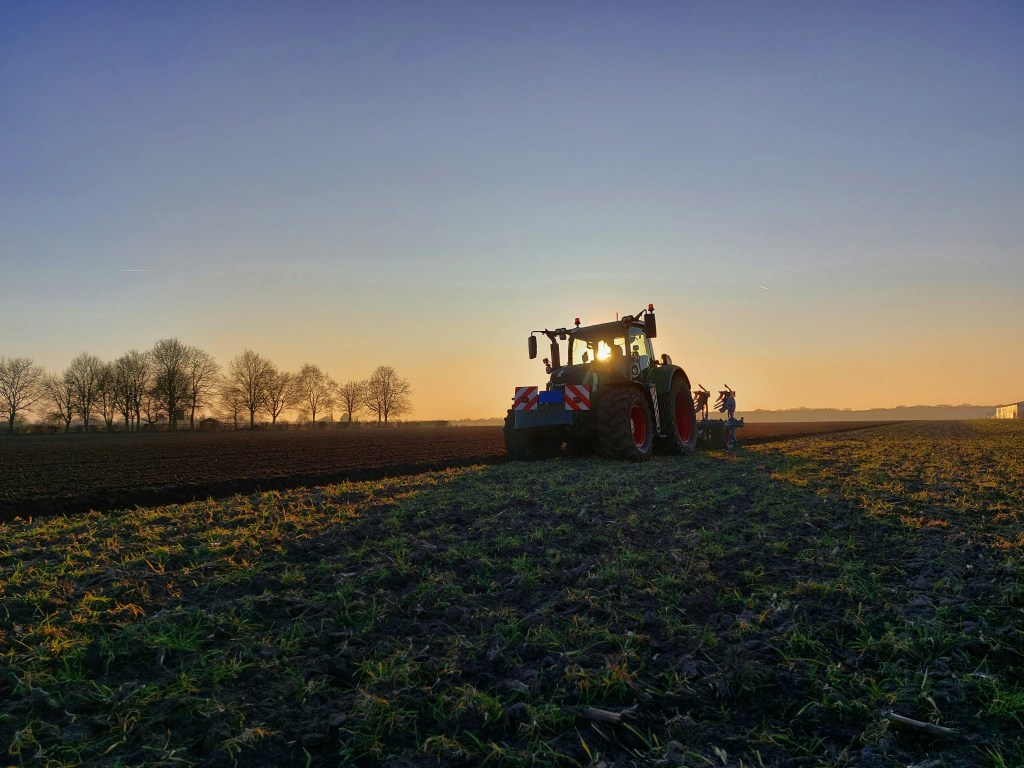
Where I grew up it wasn’t uncommon to see a tractor driving on the highway. It was a reminder of the hard working farmers doing their faithful work so others could benefit from a forthcoming harvest.
Rolling fields were speckled throughout the rural Kentucky landscape, and occasionally a tractor or other machinery could be spotted off in the distance, a cloud of dust behind it.
I know little about farming, but I understand that it takes patience. New fields are firm and dry. The soil has never been broken up. The harvest will come later if the laborer remains faithful.
Throw a seed at firm, dry soil and nothing but weeds will grow.
The hard soil has to be turned before the seed is ever planted.
The sacred work of plowing and tilling
God has given us work to do since He created the world. The work mandate started with Adam before sin came into the picture: The LORD God took the man and put him in the Garden of Eden to work it and take care of it (Genesis 2:15).
It was after the fall that work became hard, painful toil.
The work that He gives each of us to do takes effort, diligence, and patience. This includes the spiritual work that He calls each of us to. It’s labor, but it’s good work.
We know God is intentional with where He places us and who He brings into our lives at any given time. He gives us mission fields to plow and till. He equips us with the seeds to plant. He gives us access to the living water to pour onto the seeds already planted. The Holy Spirit empowers us to keep watering. We may never see the full harvest in our lifetime, but by His grace He invites us into this sacred work.
The soil needs preparing
The farmer deals with the untouched, hard soil by plowing it. This breaks up what was there, and gives it access to be fed with nutrients, water, and air. It creates a healthy environment for proper growth to happen. Rain has better access and the seeds can grow when they’re planted. Roots can grow easier, and deeper.
Next, the farmer tills. This uproots weeds and interrupts their growth cycle. It allows the ground to be enriched with compost and other organic material. And it creates a smooth, even surface for planting seeds.
As followers of Christ, our work is to disciple others–to be fishers of men, just as Jesus called Simon Peter to do. Sometimes this looks like plowing and tilling the field for a long time, trusting the Holy Spirit to begin the transforming work as hearts are softened. Farmers plow, till, and wait. Depending on when the tilling is finished, it could be days or months before the first seeds are planted.
The seed is the Gospel
In Jesus’ Parable of the Sower, He uses four illustrations of people receiving the gospel message. “Behold, a sower went out to sow.”
Here are the four illustrations, as told in Matthew 13:1-9, Mark 4:1-9, and Luke 8:4-8:
- Some seed fell by the wayside; and the birds came and devoured them.
- Some fell on stony places, where they did not have much earth; they immediately sprang up because they had no depth of earth. They were scorched by the sun, and withered away.
- Some fell among the thorns, and the thorns choked them.
- Others fell on good ground and yielded a crop: some a hundredfold, some sixty, some thirty.
We see the healthiest soil was that which yielded fruit. Healthy soil doesn’t happen by accident. This is why we plow and till for a while, so we have healthy soil. We want the gospel message to take root. We want the seed to be planted in a healthy environment. We want lives to be changed. We want Jesus to be magnified; worthy is He to receive glory and honor and power (Rev. 4:11).
“But the seed on good soil stands for those with a noble and good heart, who hear the word, retain it, and by persevering produce a crop.” Luke 8:15
Our role in the process
Here’s how we can patiently do the tilling, partnering with the Lord in His Kingdom building and strengthening.
- Faithfully praying for your children, your life group, your mentee (disciple), your relatives, your co-workers, your friends, whoever He has placed on your heart in this particular season.
- Consistently making daily appointments with God by being in His Word and in prayer.
- Showing up week after week (or whatever the timeframe is for you), even if you don’t see the transforming work happening. Trust that it is. God wastes nothing.
- Listening often, and having good discernment for when to speak. Learn to meet them where they are, just as Jesus often did in the Gospels.
- Answering questions honestly.
- Sharing your faith journey when appropriate.
- Serving others by meeting a need.
- Asking the Lord to guide you every step of the way.
In brief, practical tilling looks like intentional relationships. After teaching the church in Galatia what a Spirit-controlled life looks like, Paul encouraged Christ’s followers to “not grow weary while doing good, for in due season we shall reap if we do not lose heart” (Galatians 6:9). The same is true for us today.
As we trust God’s faithful work to be done overtime, there will be fruit that will look like love, joy, peace, patience, kindness, goodness, self-control, faithfulness, and gentleness in those we have spiritually nurtured. Don’t lose heart. Keep tilling, planting, and watering. God will give the growth.
Pray:
Lord, thank you for allowing me to be a co-laborer with You. Help me to be in full submission to Your leading as I point others to You. Equip me with the words to share and discernment for when to speak. Humble me and give me patience. Thank you for the life-changing gift of eternal salvation and the on-going work you’re doing in me. In Your holy and precious name, Amen!
Reflect:
What does your mission field look like today? How can you be tilling, laying the groundwork, to allow the Holy Spirit to plant the seed of the gospel deep in their hearts? How can you water the seeds? How can you be watered?
Further reading: 1 Corinthians 3
Photo by Duncan Ralston on Unsplash
All scripture references are from the English Standard Version, unless otherwise noted.
If you would like to subscribe to my new quarterly newsletter, Magnify, please add your email address here.






 Anna Moore
Leave a comment